


Kitchen and bath
What is in drain cleaner, and what to reach for instead
A bottle of drain cleaner promises to dissolve a clog without you touching it. It can, because it is made to dissolve hair and grease, and hair and grease are not the only things it dissolves. Before you pour one down a slow tub or kitchen drain, it is worth knowing what is in it and what the public health sources say about handling it.
Two kinds of bottle
Poison Control sorts drain cleaners into two groups. Non-enzymatic cleaners work with strong chemistry: corrosive acids such as sulfuric or hydrochloric acid, or alkalis such as sodium and potassium hydroxide, the substance sold as lye. Some of them heat up as they react, which helps melt grease. Enzymatic cleaners use bacteria and enzymes instead and work slowly.
| Type | What does the work | What the sources warn about |
|---|---|---|
| Acid cleaner | Sulfuric or hydrochloric acid | Severe burns if swallowed or splashed |
| Alkaline cleaner | Sodium or potassium hydroxide (lye) | Burns of the mouth, throat and eyes; MedlinePlus names sodium hydroxide as the poisonous ingredient |
| Enzymatic cleaner | Bacteria and enzymes | Slow; still a product to keep away from children |
Why the label asks for goggles
The danger is not only in drinking it, which is mostly a risk for small children who find an open bottle. It is in the splash. Poison Control advises wearing goggles and rubber gloves, pouring slowly and close to the drain, and keeping the container closed and out of reach. MedlinePlus lists burns of the mouth and throat, trouble breathing and vision damage after eye contact among the symptoms of drain cleaner poisoning, and is plain about the first step: seek medical help immediately, and do not make the person throw up unless Poison Control or a health professional says to.
The number to keep is 1-800-222-1222, the national Poison Control line. It is free and answers around the clock.
After the clog: leftovers and mixing
The EPA counts drain cleaners among household hazardous waste. Its advice for leftovers is to follow the label, keep the product in its original container and never mix it with another product, and it lists pouring hazardous leftovers down the drain as improper disposal. Two cleaners poured one after the other, because the first did not work, are exactly the mixing it warns against.
The mechanical route
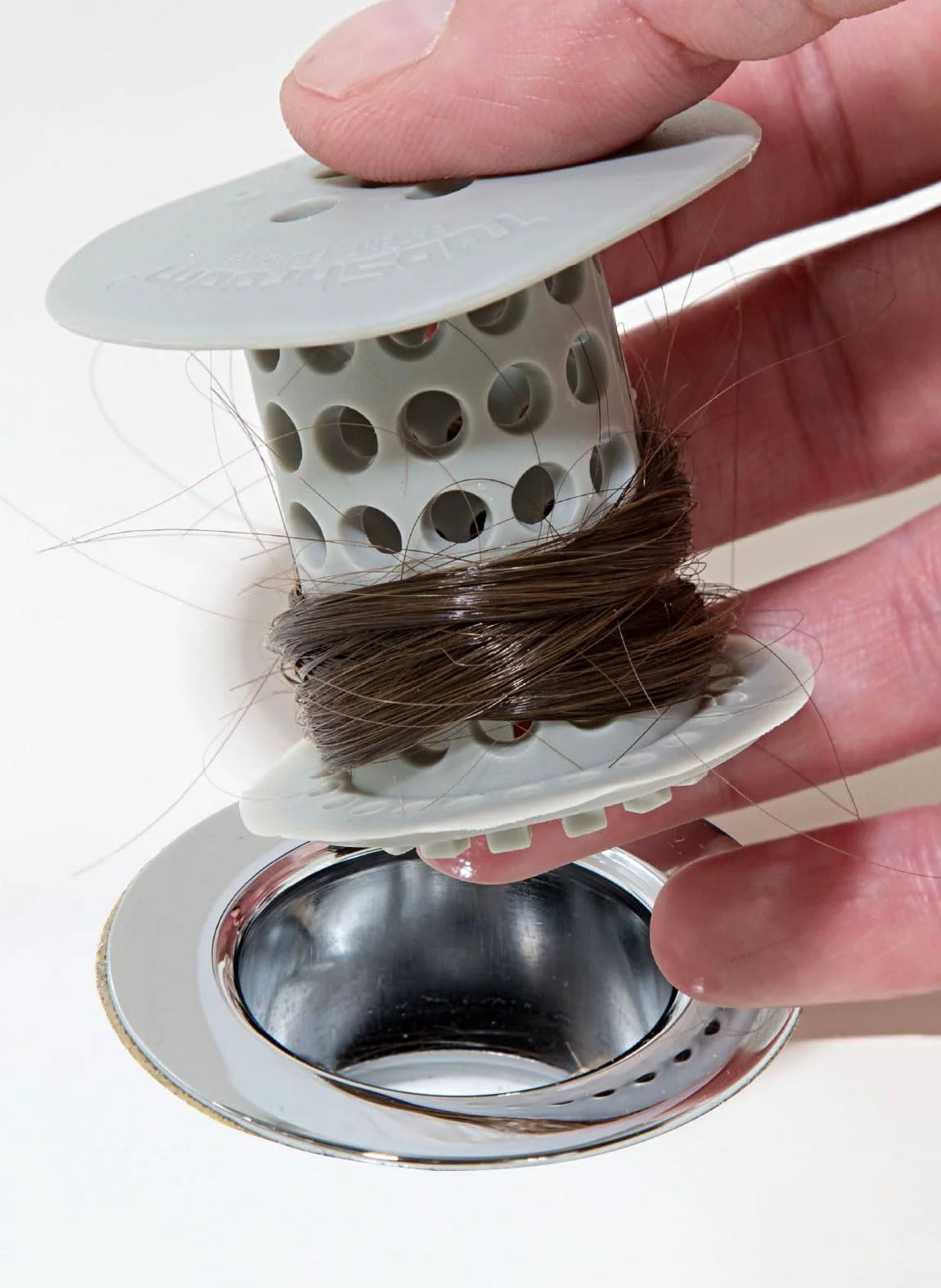
For the clogs these bottles are bought for, a slow tub or sink, there is a route with no chemistry at all, in two parts. First, pull the clog out: a hand snake goes down a tub or sink drain, hooks the rope of hair hanging from the crossbar, and brings it back up. Then keep it from forming again with a catcher that holds the hair where you can lift it out.
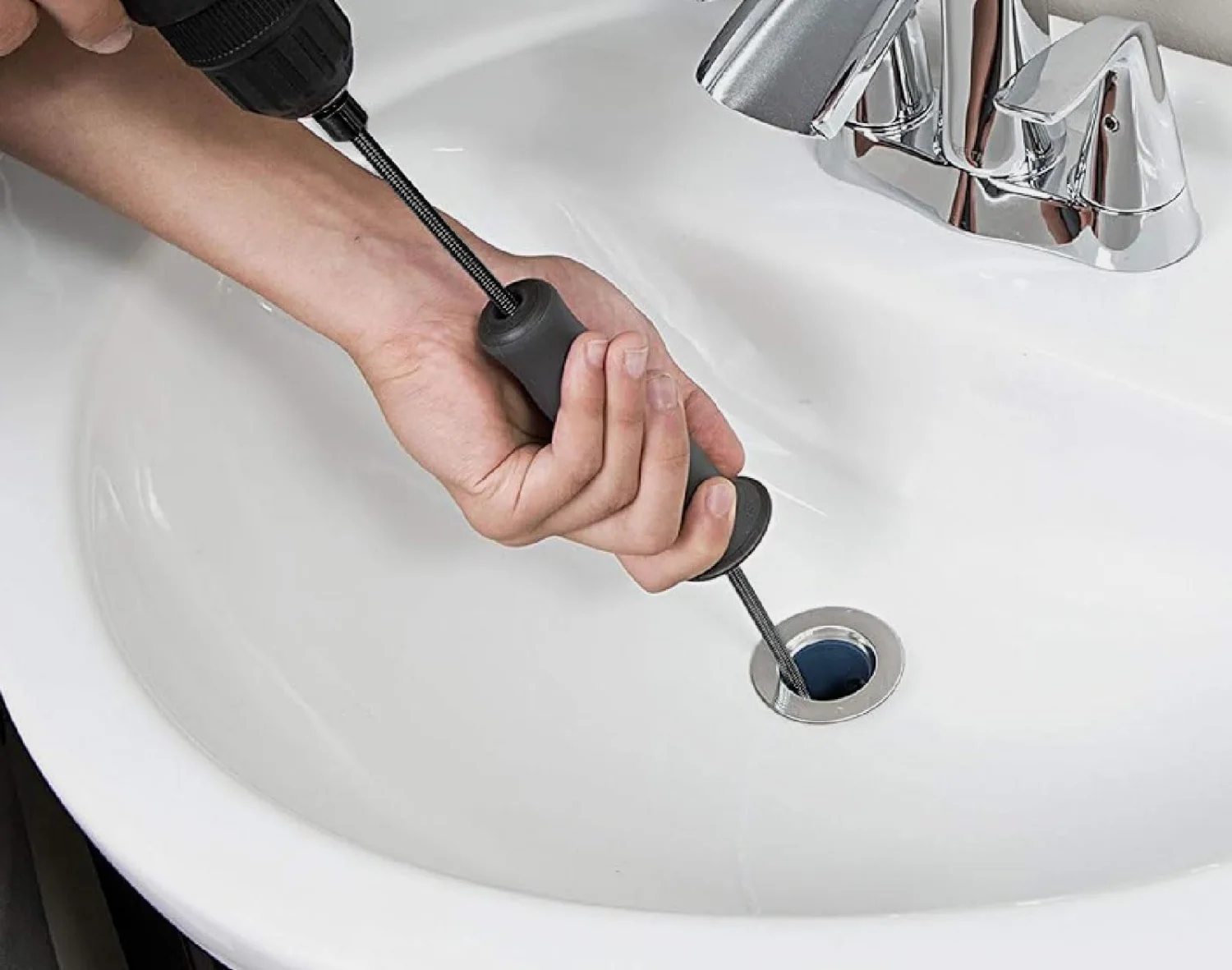

- Bathtub: a TubShroom in the drain, wiped once a week.
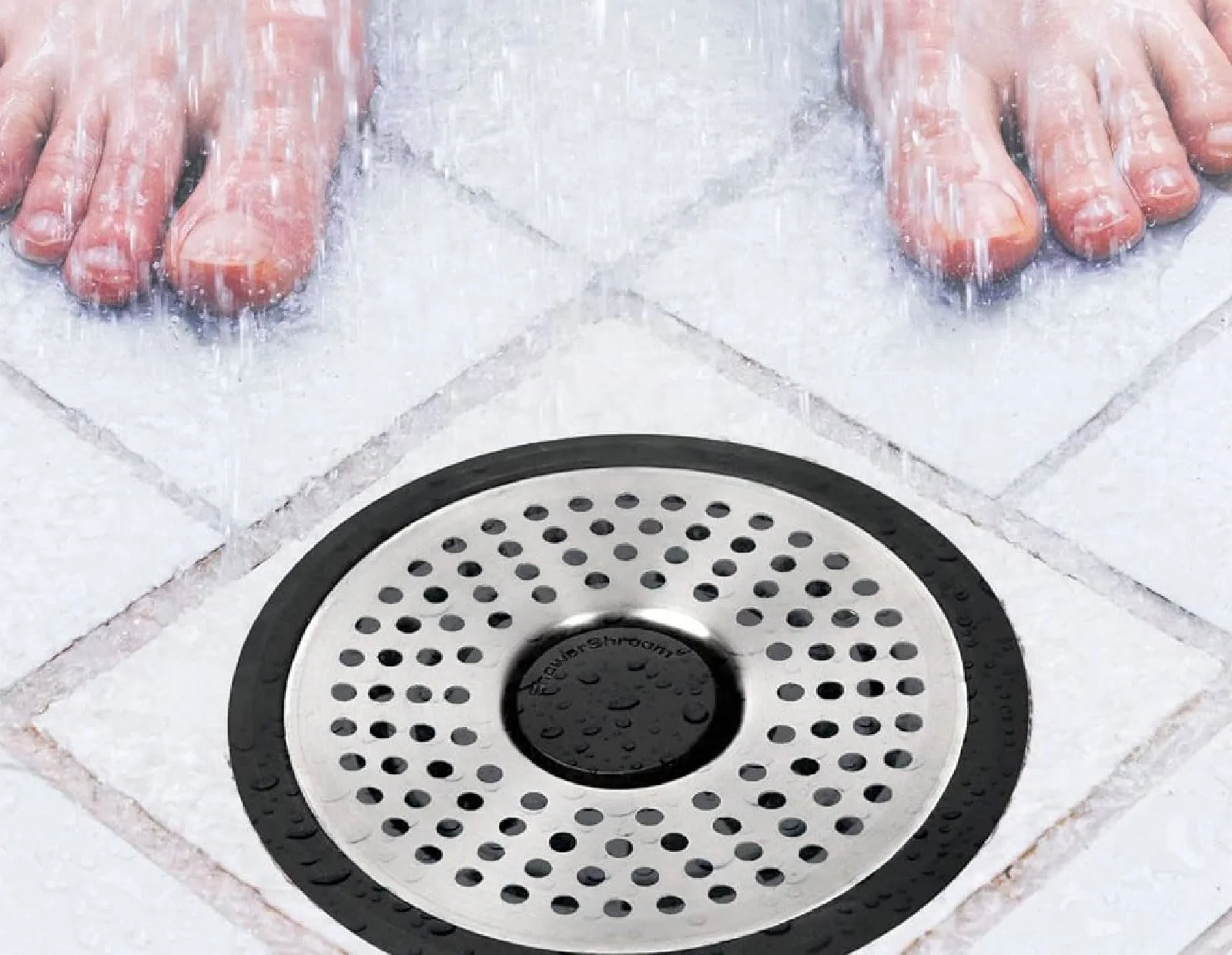
- Shower: the ShowerShroom Ultra in place of the flat cover, or the Stand-Up under a stall grate.
- Bathroom sink: a SinkShroom where the pop-up stopper was.
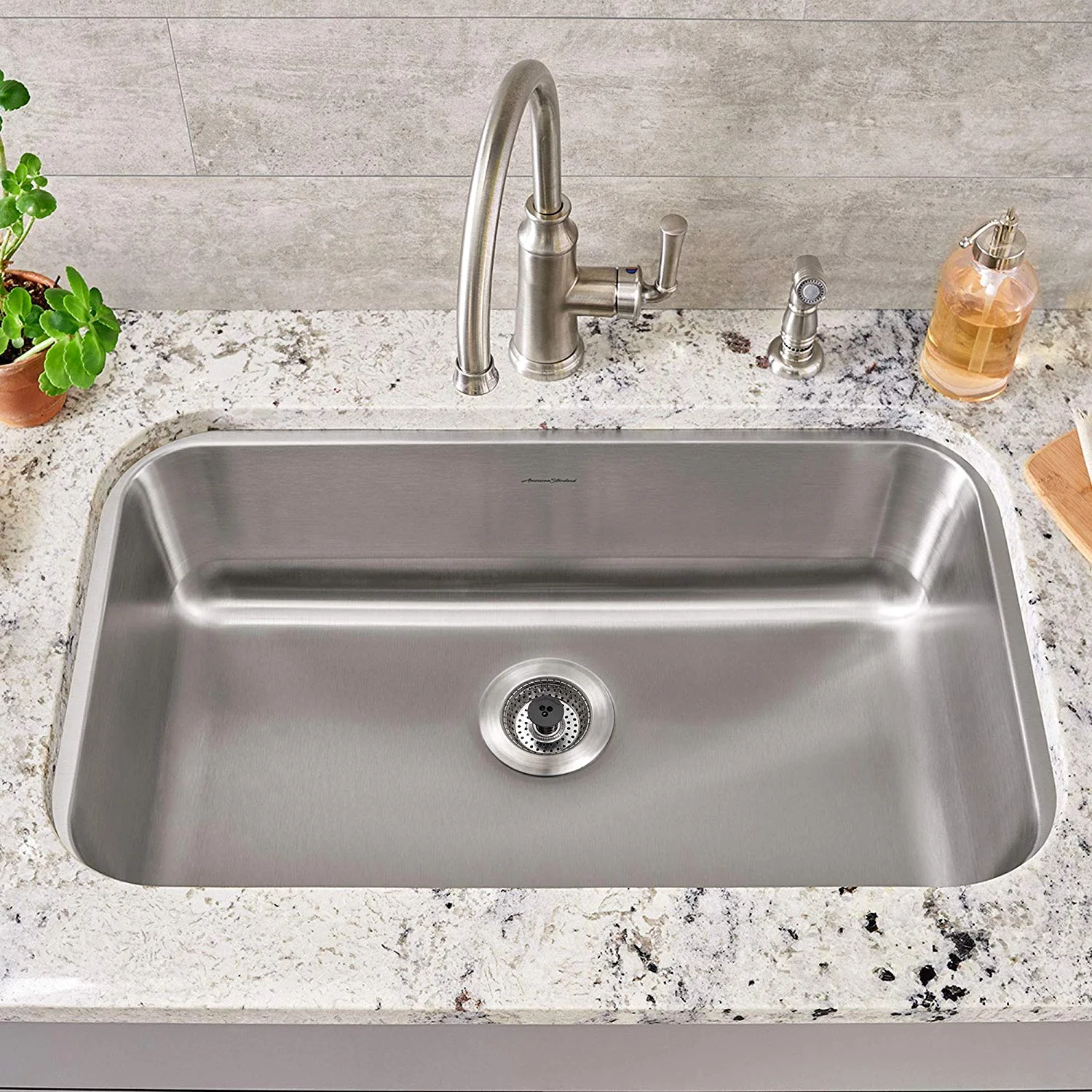
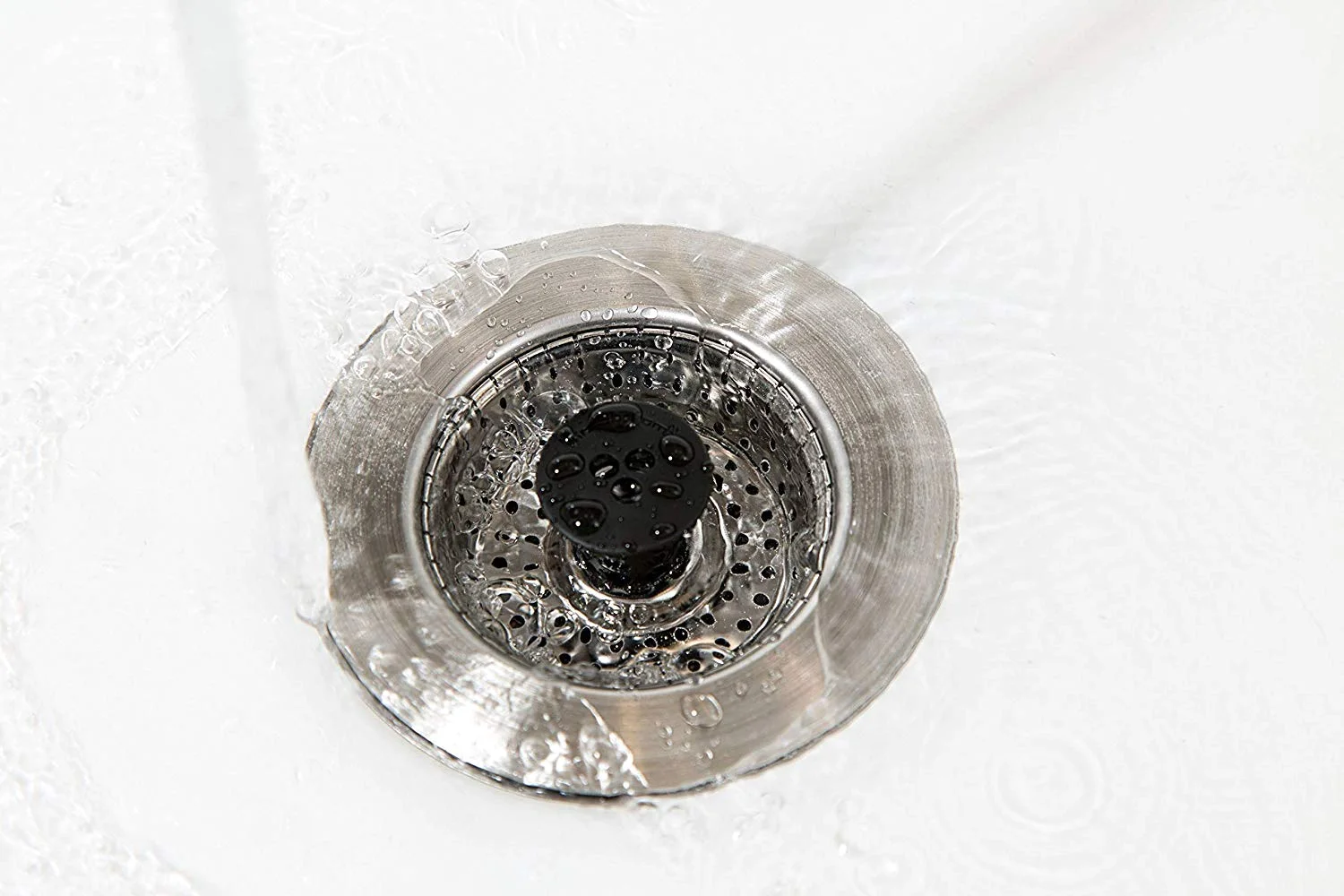
- Kitchen: the Kitchen SinkShroom basket, emptied into the trash, with grease wiped into the trash rather than rinsed down.
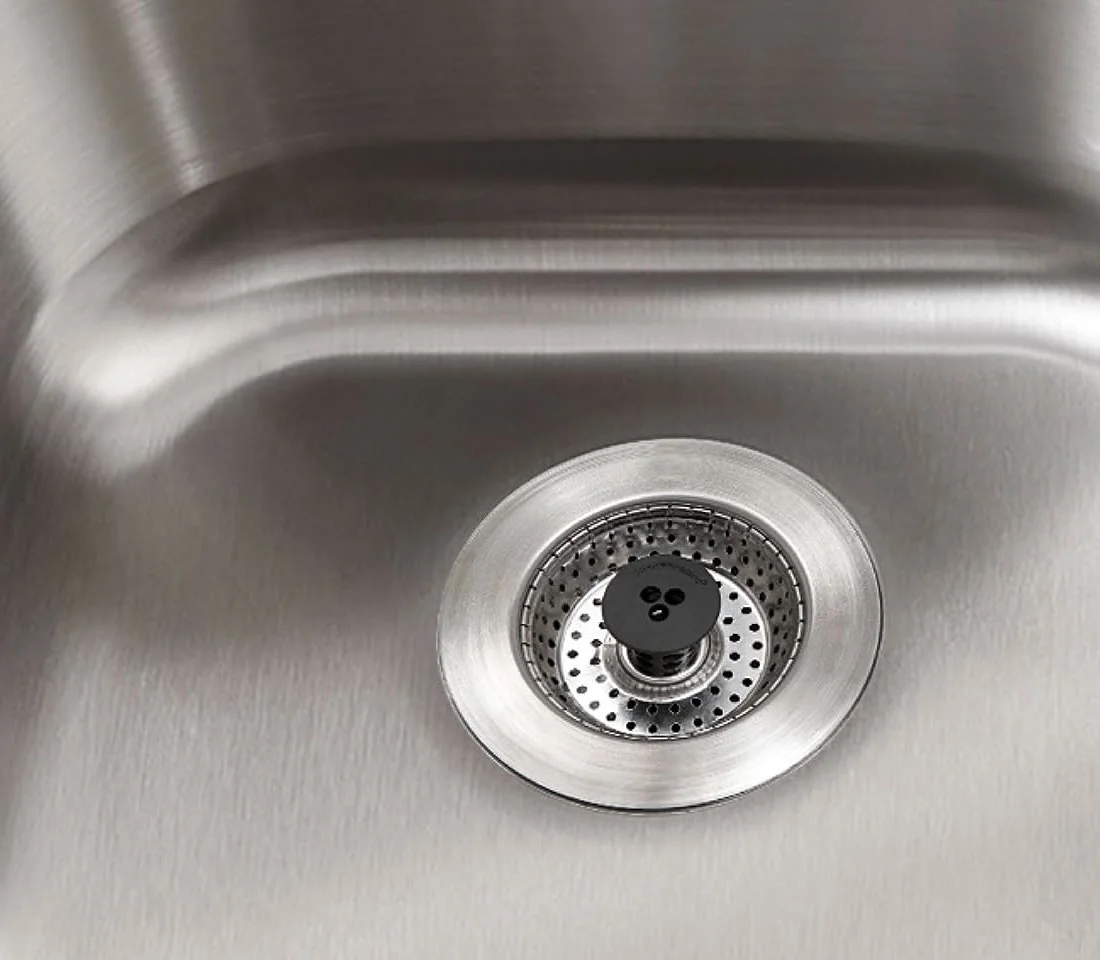
None of this makes a drain maintenance-free. A catcher still needs its weekly wipe, and a clog beyond a snake's reach still needs a plumber. What it does is keep the bottle on the shelf, which is where the ShowerShroom team would like it to stay. The drain size guide shows which catcher fits each of your drains.


